

logo

Verlag der Technischen Universität Graz

 Die TU Graz  Fakultäten  Studien  Forschung  Institute 

  • Home
  • About Us
  • Cooperations
  • Bookshop
  • For Authors
  • Legal Matters
    • AGB
    • Publisher
  • de
  • en

Alen Celeketic,

Marija Celeketic

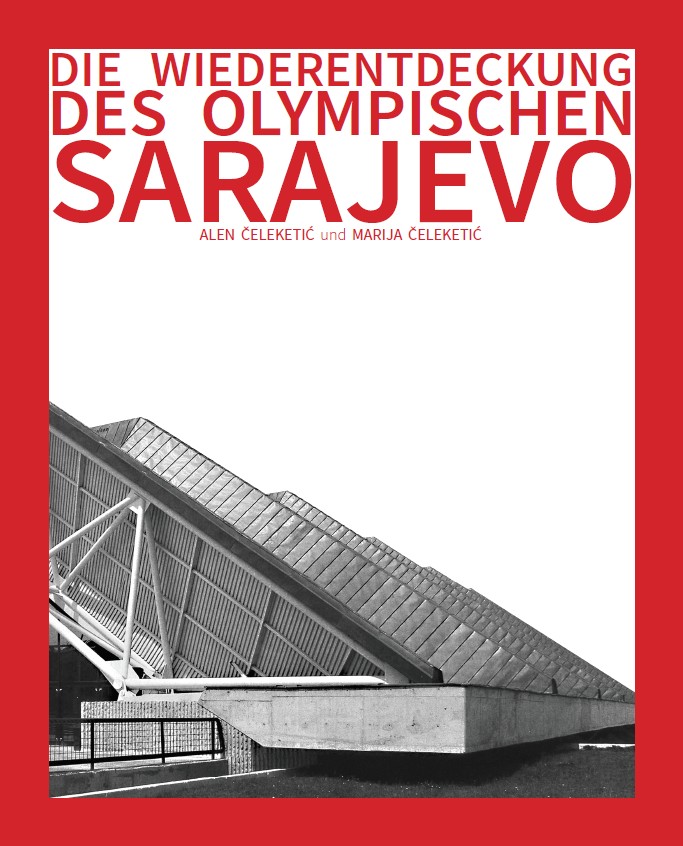
Die Wiederentdeckung des olympischen Sarajevo
Alen Celeketic / Marija Celeketic
Die Wiederentdeckung des olympischen Sarajevo

Issue: paperback
ISBN: 978-3-85125-780-9
Scope: 207 pages
Language: Deutsch
Release date: October 2020

€ 35.00

The 1984 Winter Olympics were one of the most significant events that Sarajevo has experienced in its history. The largest sporting event of Yugoslavia had in the economic sense a tremendous impact on the development of the city infrastructure and the winter tourism in Sarajevo. After the Olympic Games Sarajevo was left with significant architecture, that on the one hand affected the urbanity of the city and the quality of life and on the other hand valorized the mountains surrounding Sarajevo. The attribute of an Olympic City, that Sarajevo gained thought the organization of the Olympic Games, enriched the Identity of the city, that developed out of its history and can be best described with the word “diversity”.

In year 1992 began the four-year siege of Sarajevo, in which among all the other tragic events almost the entire Olympic infrastructure was damaged. The city of Sarajevo today is perceived in the world as a wounded city, that is trying to regain its old glory. After the war had ended, began the renovation of the old and construction of new buildings. Great emphasis was placed on ensuring that buildings from earlier centuries were restored with due respect for the architecture. On the other side not enough respect was shown toward buildings that were built in the time of the SFRY, although they are also the part of the history and the identity of Sarajevo and are considered to be the witnesses of their time. Especially affected with the problem of missing respect are the Olympic buildings. It seems that the architectural and economic potential that these buildings have, has not yet been recognized. In the worst case, this problem can lead to a part of the architectural history of Sarajevo being completely lost.

The goal of this book is an intensive examination of the Olympic Infrastructure. Based on the existing sources a profound analysis of the buildings is made to answer the question of the architectural potential and to raise awareness of the importance of these structures. The book also includes an examination of the function of these buildings during and after the Olympics and in the present as well. The knowledge should be obtained as to whether and why it would be important to treat the Olympic buildings with due respect in the future, as well as which role the Olympic architecture plays in the creation of an overall image of the city of Sarajevo.


  • Description
Creative Commons Licence:

This work is licensed under the Creative Commons Attribution License 4.0 (CC BY NC ND 4.0) https://creativecommons.org/licenses/by-nc-nd/4.0/


also available as e-book

The 1984 Winter Olympics were one of the most significant events that Sarajevo has experienced in its history. The largest sporting event of Yugoslavia had in the economic sense a tremendous impact on the development of the city infrastructure and the winter tourism in Sarajevo. After the Olympic Games Sarajevo was left with significant architecture, that on the one hand affected the urbanity of the city and the quality of life and on the other hand valorized the mountains surrounding Sarajevo. The attribute of an Olympic City, that Sarajevo gained thought the organization of the Olympic Games, enriched the Identity of the city, that developed out of its history and can be best described with the word “diversity”.

In year 1992 began the four-year siege of Sarajevo, in which among all the other tragic events almost the entire Olympic infrastructure was damaged. The city of Sarajevo today is perceived in the world as a wounded city, that is trying to regain its old glory. After the war had ended, began the renovation of the old and construction of new buildings. Great emphasis was placed on ensuring that buildings from earlier centuries were restored with due respect for the architecture. On the other side not enough respect was shown toward buildings that were built in the time of the SFRY, although they are also the part of the history and the identity of Sarajevo and are considered to be the witnesses of their time. Especially affected with the problem of missing respect are the Olympic buildings. It seems that the architectural and economic potential that these buildings have, has not yet been recognized. In the worst case, this problem can lead to a part of the architectural history of Sarajevo being completely lost.

The goal of this book is an intensive examination of the Olympic Infrastructure. Based on the existing sources a profound analysis of the buildings is made to answer the question of the architectural potential and to raise awareness of the importance of these structures. The book also includes an examination of the function of these buildings during and after the Olympics and in the present as well. The knowledge should be obtained as to whether and why it would be important to treat the Olympic buildings with due respect in the future, as well as which role the Olympic architecture plays in the creation of an overall image of the city of Sarajevo.

  • Catalog
    • Architecture
    • Civil Engineering Sciences
    • Electrical and Information Engineering
    • Computer Science and Biomedical Engineering
    • Interdisciplinary
    • Mechanical Engineering and Economic Sciences
    • Technical Chemistry, Chemical and Process Engineering, Biotechnology
    • Technical Mathematics, Physics and Geodesy
  • Sale
  • Open Access publications
  • Series
    • Akademische Reden an der Technischen Universität Graz
    • Arbeitshilfen für die Praxis
    • Archiv und Bibliothek
    • Betonkolloquium
    • Buddhist Architecture in the Western Himalayas
    • BWL Schriftenreihe
    • Electrical Power Systems
    • Fachbücher Planung und Bau
    • Facts & Figures
    • Festschriften TU Graz
    • Forschungsreihe IBBW
    • Forum Technik und Gesellschaft
    • Geodesy
    • Immersive Learning Research Network Conference; Workshop, short papers, poster
    • LM.VM.2014
    • Logistik Werkstatt Graz
    • Materialien zu Schwerpunkten am Institut für Gebäudelehre
    • Mathematical Modelling of Weld Phenomena
    • Monographic Series TU Graz
    • Monographic Series TU Graz|Advanced Materials Science
    • Monographic Series TU Graz|Computation in Engineering and Science
    • Monographic Series TU Graz|Production Science and Management
    • Monographic Series TU Graz|Railway Research
    • Monographic Series TU Graz|Reihe Fahrzeugtechnik
    • Monographic Series TU Graz|Schriftenreihe des Instituts Betonbau
    • Monographic Series TU Graz|Structural Analysis
    • Monographic Series TU Graz|Techno- und sozioökonomisch orientierte Betriebswirtschaft
    • Monographic Series TU Graz|Technoökonomie und industrielles Management
    • Monographic Series TU Graz|Timber Engineering & Technology
    • November Talks
    • Proceedings of the International Brain-Computer Interface
    • Projektmanagement in der Bau- und Immobilienwirtschaft|Level D Bauprojekt Management
    • Schriftenreihe des Instituts für Baubetrieb und Bauwirtschaft
    • Schriftenreihe des Instituts für Straßen- und Verkehrswesen
    • Schriftenreihe des Instituts für Wohnbau der TU Graz
    • Schriftenreihe zur Wasserwirtschaft
    • Science, Technology and Society online
    • Seminarreihe Bauunternehmensführung
    • Studien zur Architektur | TU Graz
    • Textbook Series
    • TU Graz Jahresbericht | Annual report
    • TU Graz people
    • TU Graz Research
    • VKM-THD Mitteilungen; IVT-Mitteilungen ab Bd. 100
  • Authors
  • Events
    • Archiv


Contact

Verlag der
Technischen Universität Graz

Technikerstraße 4
8010 Graz, Österreich
UID(VAT) ATU 57477929

contact person

Gabriele Groß
Tel.: +43(0)316 873 6157
E-Mail: verlag [ at ] tugraz.at


back to TU© 2026 TUGraz | powered by